When purchasing steel grating for a construction, industrial or infrastructure project, the quality of the finished product is just as important as the specification and price.
A steel grating panel may look simple, but several details can affect fabrication quality, installation and final performance.
Before a custom steel grating order leaves our factory, we carry out a final quality inspection based on the approved drawings, purchase specifications and agreed project requirements.
Below is an example of the inspection process we use at Dingyue Metal.
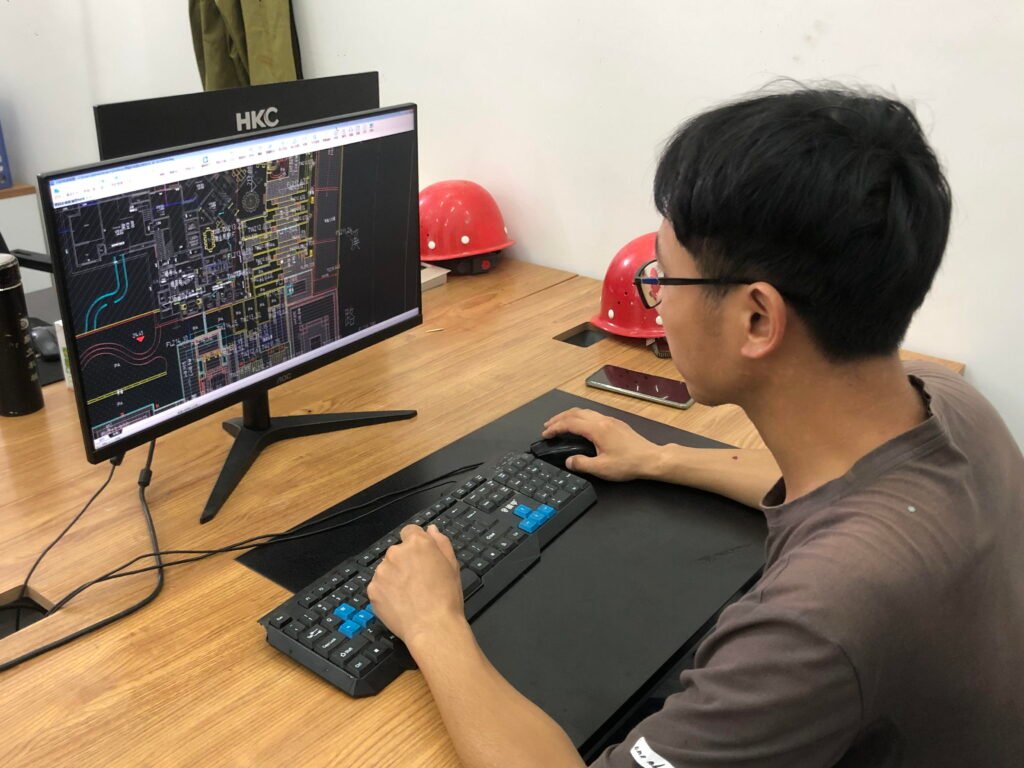
1. Check the Approved Drawing and Specifications
Quality inspection starts before we measure the finished product.
For custom steel grating, our QC team first checks the applicable production information, including:
- Approved drawings
- Panel dimensions
- Bearing bar size
- Bearing bar spacing
- Cross bar spacing
- Bearing bar direction
- Cut-outs and openings
- Edge treatment
- Surface treatment
- Project-specific requirements
This is important because there is no single specification that is suitable for every steel grating project.
The inspection should be based on the approved drawing and agreed requirements, rather than simply comparing the product with a catalogue image.
2. Steel Grating Dimension Inspection
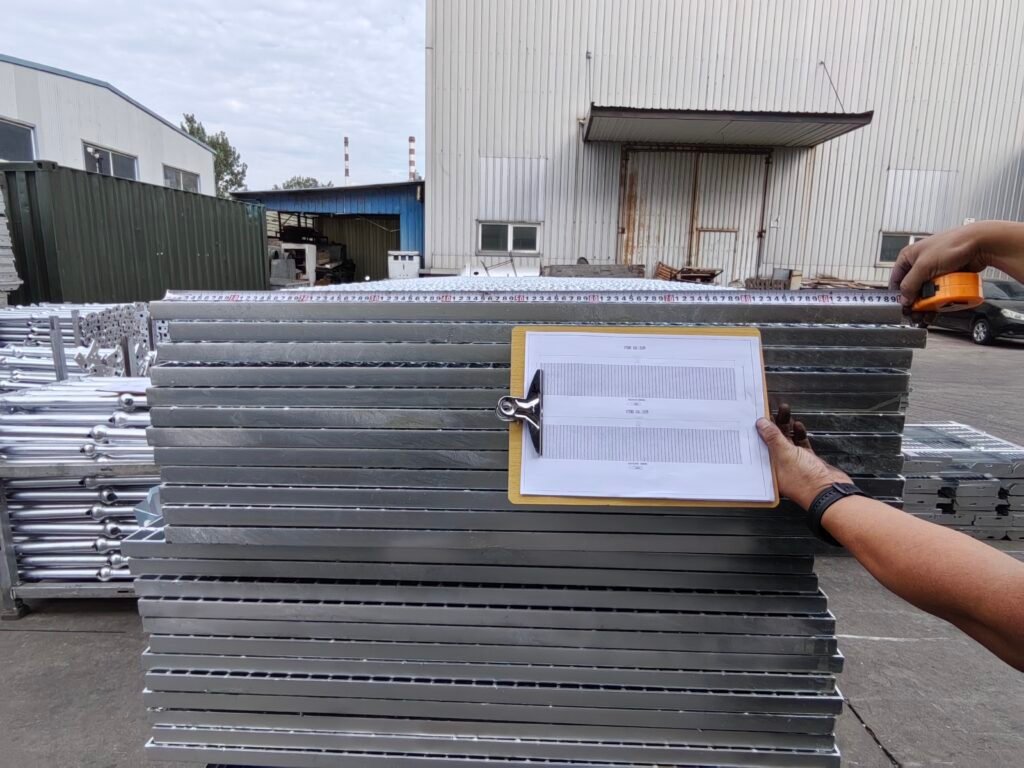
Dimensional accuracy is one of the most important checks before shipment.
Depending on the project, we may check:
- Panel length
- Panel width
- Overall dimensions
- Bearing bar spacing
- Cross bar spacing
- Cut-out dimensions
- Edge dimensions
- Squareness and alignment
For custom-fabricated grating, even a relatively small dimensional difference can affect installation when panels need to fit into a specific supporting structure.
Our QC approach:
Measure the finished product against the approved drawing and project requirements before packing.
Figure 1. Dimensional inspection of custom steel grating before shipment.
3. Bearing Bar and Cross Bar Inspection
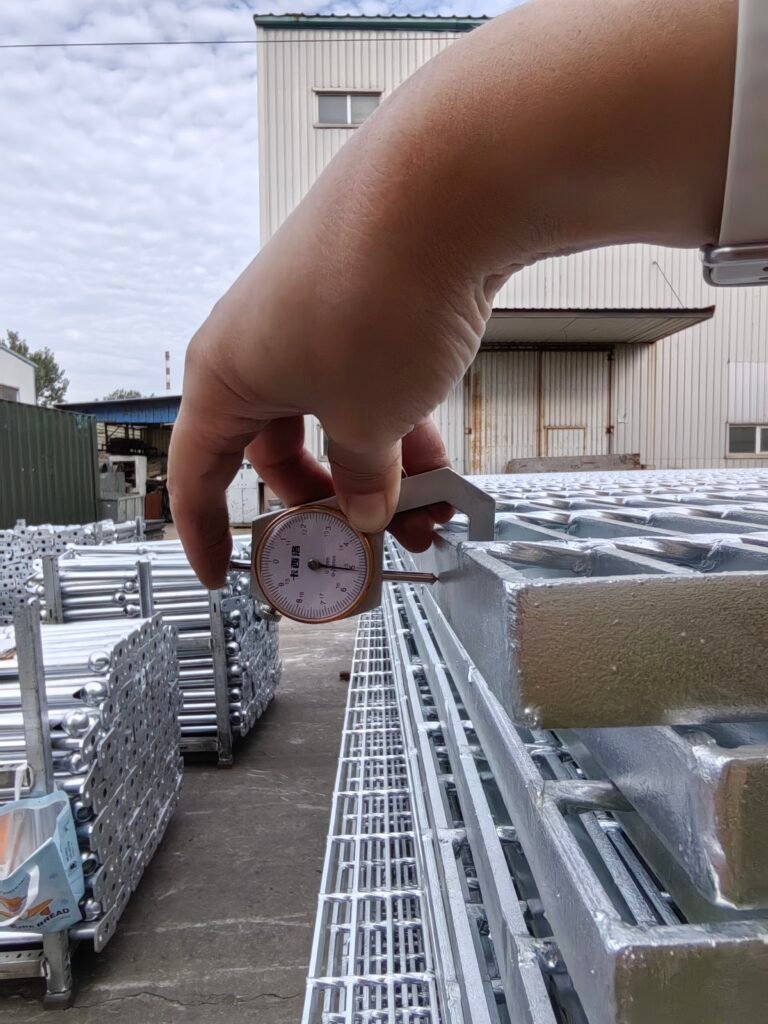
The bearing bars are the primary load-carrying components of welded steel grating.
During inspection, we check the required:
- Bearing bar height
- Bearing bar thickness
- Bearing bar spacing
- Cross bar type
- Cross bar spacing
- Cross bar arrangement
These specifications should correspond to the requirements established during the engineering and quotation stage.
For this reason, we recommend that buyers provide the span, expected loading condition, panel dimensions and application when requesting a quotation.
This allows the supplier to understand the actual project requirement instead of quoting only from the product name.
4. Welding Quality Inspection
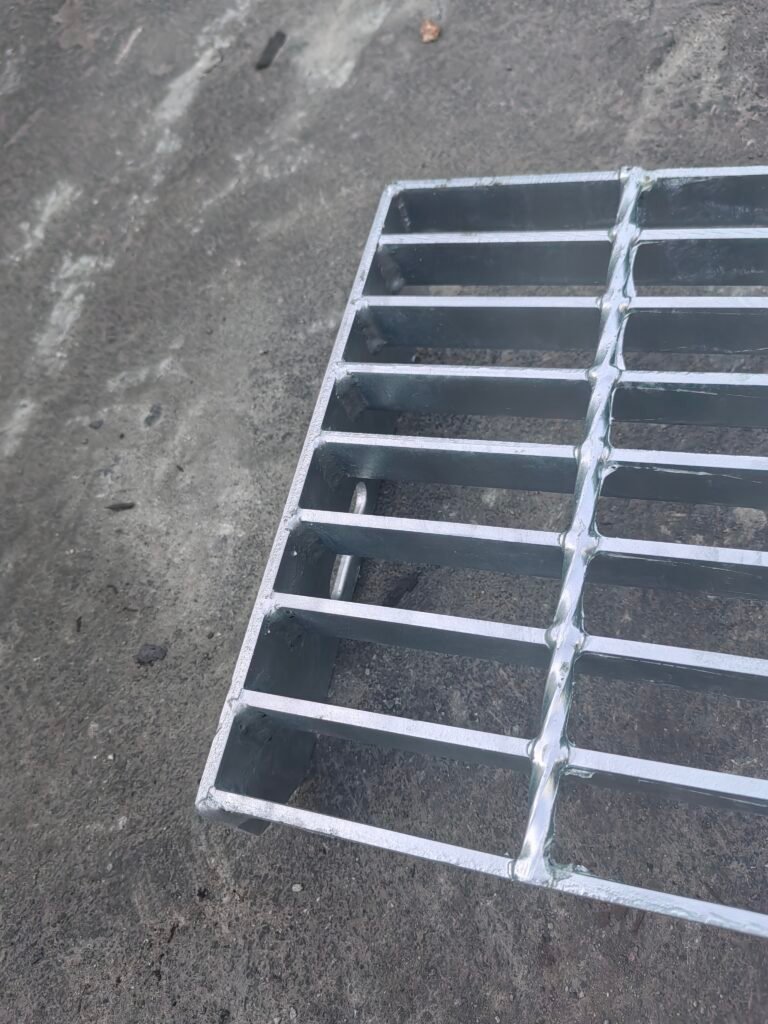
Welding is a critical part of welded steel grating manufacturing.
The bearing bars and cross bars need to be properly positioned and securely joined according to the specified manufacturing process.
During final inspection, we look for visible issues such as:
- Incomplete or inconsistent welds
- Obvious welding defects
- Loose or poorly connected bars
- Misalignment
- Damaged areas caused during fabrication
The inspection criteria should be based on the agreed production requirements and applicable project standards.
Why does welding inspection matter?
Poor welding or incorrect bar positioning can affect the consistency and integrity of the finished panel.
For custom orders, welding quality should therefore be considered together with dimensions, material specifications and surface treatment.
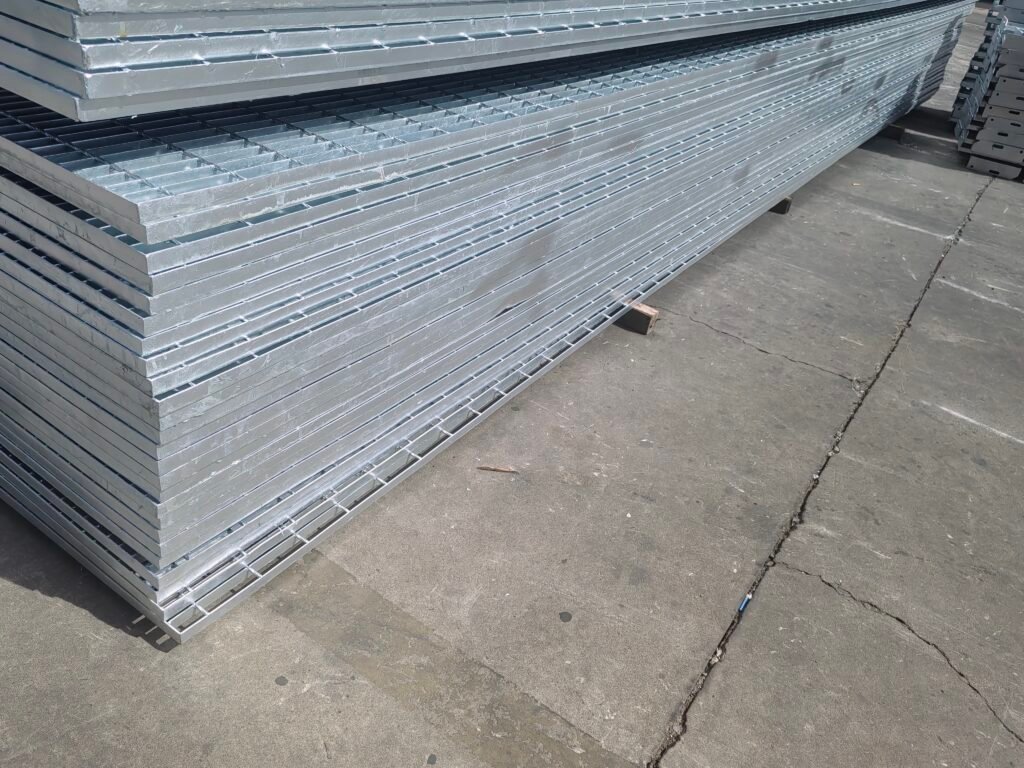
5. Panel Flatness and Appearance
After welding and fabrication, we also inspect the overall condition of the grating panels.
Typical checks include:
- Panel flatness
- Visible deformation
- Bar alignment
- Overall appearance
- Damaged areas
- Sharp or unfinished edges where applicable
Flatness is particularly important for panels that will be installed into a predefined supporting structure.
6. Surface Treatment Inspection
Depending on the project requirements, steel grating may be supplied with:
- Mill finish
- Hot-dip galvanizing
- Painting
- Powder coating
- Other specified finishes
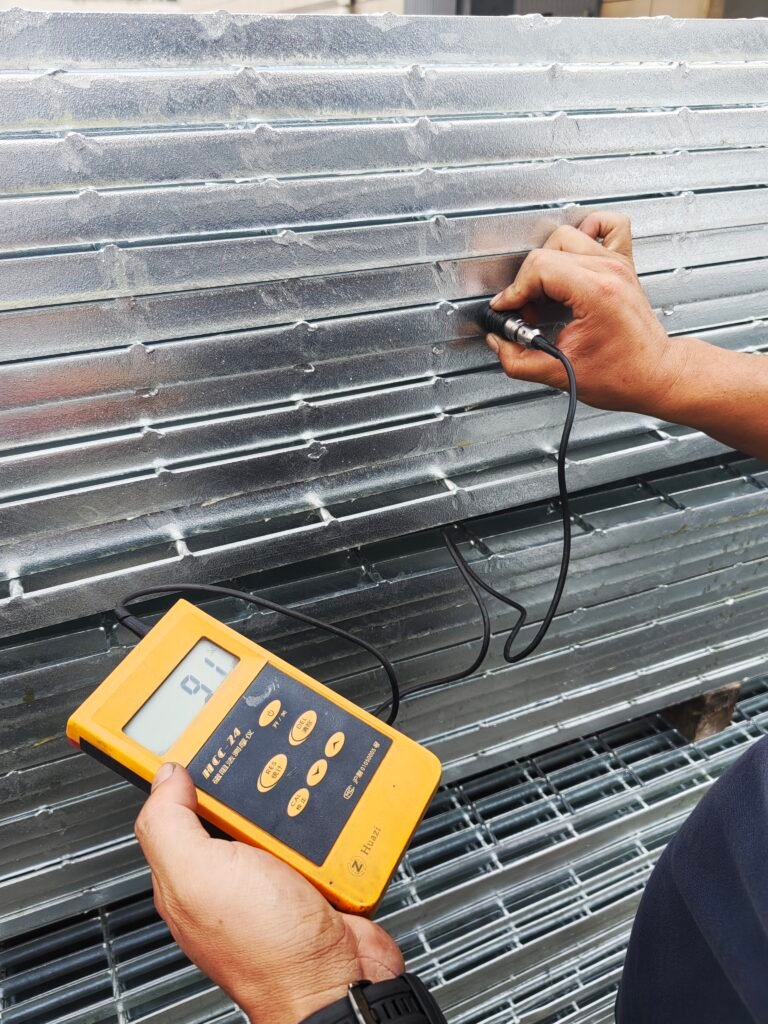
For galvanized steel grating, the inspection should consider the agreed galvanizing requirements and applicable standard.
We also visually inspect the galvanized surface for obvious problems such as:
- Uneven surface condition
- Excess zinc accumulation
- Bare areas
- Damage
- Handling marks
If a project specifies a particular coating thickness or standard, the inspection should follow the agreed requirement rather than relying only on visual appearance.
7. Identification, Packing and Loading
Quality control does not stop after the product passes inspection.
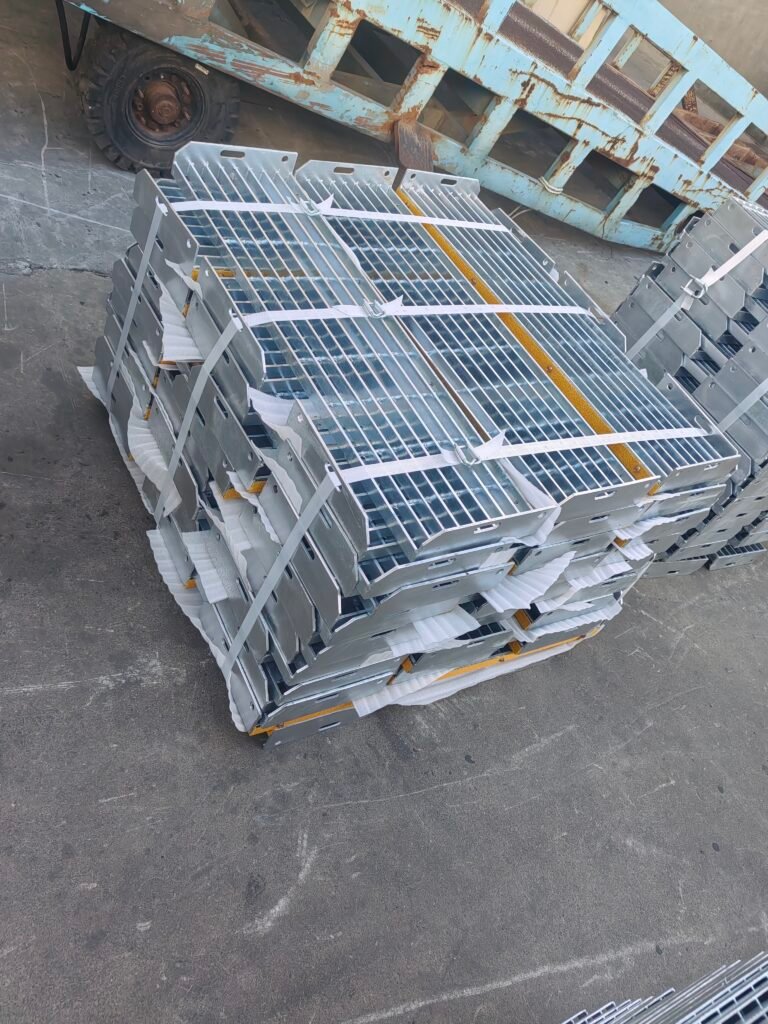
Before shipment, we also check:
- Product identification
- Panel/bundle markings
- Quantity
- Packing condition
- Protection during transportation
- Loading arrangement
Correct identification is especially important for projects containing many different panel sizes.
A clearly marked shipment can make receiving and installation easier for the customer.
8. What Our QC Process Looks Like
For a typical custom steel grating order, the process can be summarized as:
Drawing Review
↓
Material Preparation
↓
Cutting & Fabrication
↓
Welding
↓
Dimensional Inspection
↓
Surface Treatment
↓
Final QC Inspection
↓
Packing & Loading
↓
Shipment
The purpose of this process is not simply to inspect the product at the end.
The goal is to identify potential issues as early as possible during manufacturing.
9. What Should Buyers Provide When Ordering Steel Grating?
A clear RFQ makes both quotation and quality control easier.
If you are requesting a quotation for custom steel grating, we recommend providing as much of the following information as possible:
| Requirement | Example |
|---|---|
| Application | Platform / walkway / drainage / industrial |
| Panel dimensions | Length × Width |
| Bearing bar | Height × Thickness |
| Bearing bar spacing | Project specification |
| Cross bar | Type and spacing |
| Load requirement | Pedestrian / equipment / vehicle |
| Surface treatment | HDG / painting / mill finish |
| Quantity | Number of panels |
| Drawing | PDF / CAD / BOQ |
| Applicable standard | Project-specific requirement |
This information helps the supplier understand what needs to be manufactured and inspected.
10. Why QC Matters for Custom Steel Grating
For standard products, buyers can often compare a catalogue specification.
For custom steel grating, however, quality depends on much more than the steel bars themselves.
The final product needs to match the agreed requirements in terms of:
Dimensions + Fabrication + Welding + Surface Treatment + Identification + Packing
That is why a clear drawing and specification are important from the beginning of the project.
At Dingyue Metal, we review the customer’s requirements before production and inspect the finished products before shipment.
About Dingyue Metal
Dingyue Metal specializes in steel grating and custom metal fabrication for construction, industrial, infrastructure and commercial applications.
Our product and fabrication capabilities include:
- Steel Grating
- Stair Treads
- Metal Railings
- Ball Joint Handrails
- Custom Steel Structures
- Custom Welded Metal Fabrication
- Hot-Dip Galvanizing
- Surface Finishing
We support customers from drawing review and fabrication to quality inspection, packing and export shipment.
If you have a drawing, BOQ or project specification, send it to us for review.
Need custom steel grating or fabricated metal products?